



Applicable Sectors


Legal Sector
Long hours, extreme and maintained pressure, exposure to distressing content and/ or events (often with no training at all) can severely impact employees stress, anxiety and focus. As well as the more serious mental health burdens of compassion fatigue, burnout and “Vicarious Post Traumatic Stress Disorder (V-PTSD). All of which have impacts on productivity, performance and employer liability.
Media & Leisure
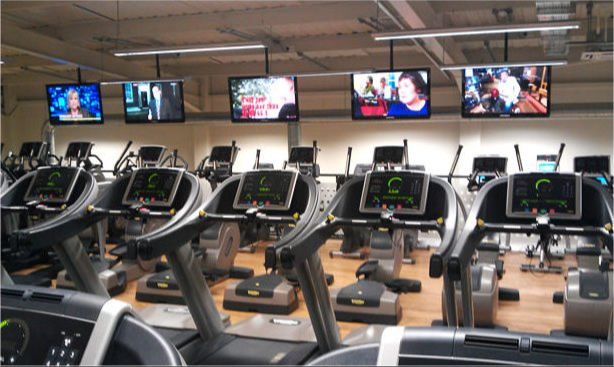
An "always-on", deadline-driven culture of long, unsociable and unpredictable hours affects every level, from leaders managing high-stakes production schedules and commercial targets to the crews, shift workers and front-line gym staff carrying constant audience and member demands. With little time to recover and - in broadcast - the impacts of exposure to distressing content, the result is mounting fatigue, anxiety and burnout that erode productivity, retention and service quality.

Construction
A physically demanding, high-risk environment defined by long hours, tight margins, job insecurity and time away from home, felt from site teams through to senior management. An entrenched "tough it out" culture discourages people at every level from seeking help, driving stress, isolation and, in this sector more than most, dangerously high rates of burnout, depression and worse, with direct consequences for safety, performance and employer liability.

Financial services
A fast-paced and demanding environment with frequent spikes in extreme high-pressure, particularly at Snr Manager level, where deadlines, high-stakes projects and make-or-break decisions can severely impact employees state of mind and performance.

Blue Light Services
High pressure, long hours, and involving frequent instances of conflict, distressing events, scenes & content, Emergency Services are at the sharp end. Vicarious-PTSD & PTSD (see below) are common, with employees suffering from high rates of burnout, anxiety, stress & compassion fatigue. Material impact on employee performance and employer liability.


Protect to Perform (PTP) programme: Vicarious Trauma & Burnout
This programme is designed for organisations whose people operate under sustained psychological pressure. Burnout is the broad problem. High pressure, long hours, and relentless utilisation place a continuous demand on the brain that it was never designed to meet, and over time that demand costs more than people can keep paying. Energy, focus, decision quality, and resilience all erode, often quietly, until the decline shows up in absence, attrition, and performance.
In some sectors there's a further layer. Where staff are exposed to distressing content, events, or others' trauma in the course of their work, they can experience secondary or vicarious trauma. It builds up over time, and it rarely arrives on its own. The same high-pressure conditions that drive burnout also lower the system's capacity to absorb that exposure, so when the two overlap, the combined cost is far greater than either alone. Understanding how and why the brain responds to these conditions is what lets people intercept the response rather than be run by it. This training proactively builds and maintains Psychological Fitness so the system has the capacity to withstand sustained pressure.
Option 1: Dedicated Vicarious Trauma training.
Equip your people with the psychological understanding to manage exposure across 2 x two hour training modules.
Option 2: End-to-end installation (company-wide)
A complete governance and operational layer that turns the framework into an embedded organisational system.
Masterclasses
This is the first and most vital module of the 12-month programme. This is where people start to see how their own operating system is running, and where time, energy, and attention are quietly being lost.
It installs the core idea everything else is built on: that the brain runs on automatic through a set of key mechanisms, and that learning to supervise them is what reduces the cost of performing under pressure.
The natural starting point, whether as a standalone session or the way into the full programme.
Exploring the hidden costs of human interactions. Unmanaged interaction patterns at work have a cost: erosion of trust, quality of decisions, collective energy and psychological safety.
People are often trained to manage their workload, their time, their priorities but not the neurobiological impact of how they interact with each other.
This can drain both their capacity, and that of their colleagues.
Conflict is unavoidable in any workplace, but how we navigate it determines whether it drains or strengthens our psychological fitness.
Unresolved disputes cost time, energy, and wellbeing, yet with the right understanding and tools, conflict can become an opportunity for growth rather than tension.
Understand the science behind how the brain reacts under pressure, and how to respond constructively when disagreements arise.



Keynotes and Conferences
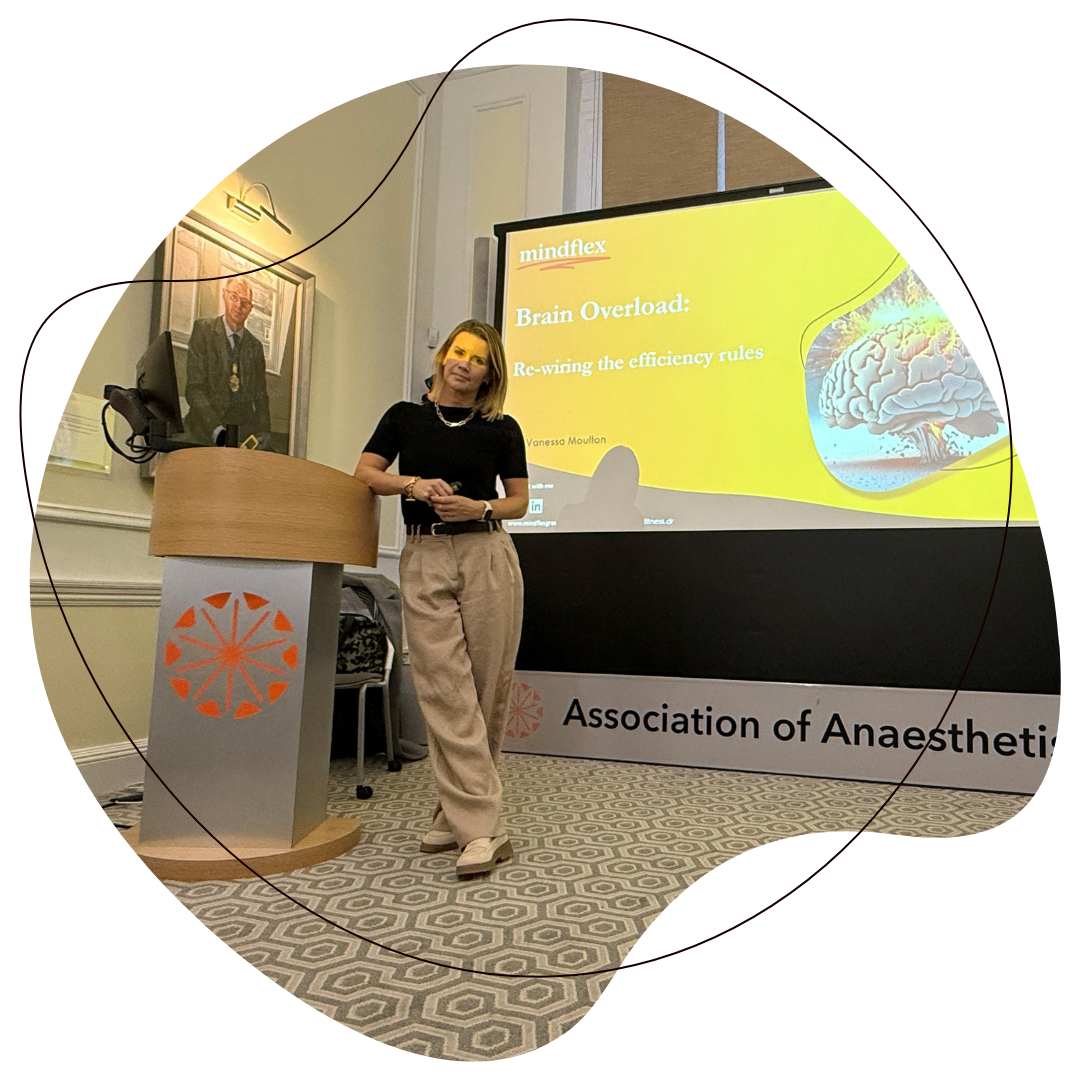
Dr Vanessa is an experienced keynote and panel speaker, frequently attending industry events to offer her unique, science-led approach by way of a range of interesting, clear and down-to-earth talks on a variety of subjects. All built upon the foundational concept of Psychological Fitness and the dangers – and potential benefits – of leaving your brain to its own devices. Drawing from her experience with the military and other high-pressure environments, her clear approach helps audiences see their own brains at work, and how to supervise the patterns running underneath their performance, at work and beyond it.
Keynote talks
Your brain runs on automatic most of the day, defaulting, protecting, and predicting without checking in with you first. It's doing its job, but in modern conditions that job costs you, in energy, focus, and the quality of your decisions.
This is the talk that explains what your brain is actually doing, why it's costing more than you realise, and what it takes to supervise it rather than be run by it.
Most people experience change as being hard without understanding why, or what it’s quietly costing them in energy, decision quality, and capacity.
Explore the three specific mechanisms through which your brain’s operating system responds to change, why those responses drain cognitive capacity, and how to supervise those mechanisms so that change costs less and lands better.
Grit isn't willpower, and mistaking the two is why so many people run out of road.
This talk takes apart what grit actually is, what the brain is doing when effort gets hard, and why the people who sustain it aren't relying on motivation at all.
In sectors exposed to distressing content, events, or others' trauma, there's a psychological cost building up in the workforce that rarely gets named, and almost never gets measured.
This talk explains what vicarious trauma is, how it accumulates, and why the high-pressure conditions most organisations treat as normal quietly make people far more vulnerable to it.
The reframe a leadership team needs before the cost shows up in absence and attrition.
Most people treat stress as a problem to eliminate. It isn't. It's your system trying to mobilise action.
This talk shows how to read stress correctly, so the energy it generates gets used rather than resisted, and people stop paying the extra cost that comes from misreading their own activation.
Executive Coaching
I work with CEOs, business founders, senior partners, executive leaders, and professional athletes from a spread of industries. Whatever the individual or business goal, my focus is on enabling people to optimise their performance and have more control over making life feel good - both in and outside of work. And unlike many other coaches, I’m a Psychologist as well as a qualified Executive Coach, so you get the best of both!
Your coaching experience incorporates my psychological fitness-backed Mindflex Method, providing a tangible, science-led approach to the sessions, but also a compass to navigate with beyond the sessions. I love to challenge and to be challenged and bring an open and honest approach to coaching - just some of the reasons why both organisations and individuals continue to use Mindflex. The success of coaching is hugely dependent on the working relationship, so I always offer a 15-30minute chemistry session with every individual before we begin, to determine if I’m the right person for them to work with. Following this, standard sessions are 1hr 15mins long.

Ready To Start?
If you're an organisation looking to support your workforce, submit an enquiry through the Contact form and we'll talk through the range of Mindflex services. If you'd like to discuss a keynote or having me on a panel, head to Speaking Enquiries.
Or explore the Mindflex Hub for podcasts, content, and online courses.
Because your brain can't just be left to its own devices.